Thursday, 20 August 2015

The Shaan of Shashi Kapoor: 5 Lessons For Bollywood to Learn From His Career

Filled under:


Shashi Kapoor

Shashi Kapoor was born with the most unfair of advantages over several other actors of his time

ALL SHASHI KAPOOR WANTED TO DO WAS ACT, BUT HE DIDN'T SIMPLY DEPEND ON HIS LAST NAME AND HIS MATINEE IDOL APPEARANCE TO BUILD A CAREER THAT SPANNED 40 YEARS AND 175 FILMS

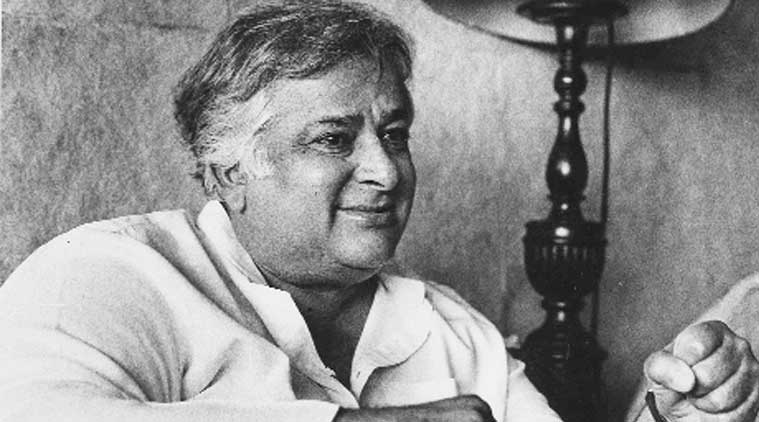
Shashi Kapoor was born with the most unfair of advantages over several other actors of his time: he was born a Kapoor, the second generation of a newly-formed Bollywood dynasty at a time when Bollywood itself was young and dynasties scarce; and he was incredibly good-looking. Like the Kapoors before him - father Prithviraj, brothers Raj and Shammi - all Shashi Kapoor wanted to do was act, but he didn't simply depend on his last name and his matinee idol appearance to build a career that spanned 40 years and 175 films. The masterclass that is Shashi Kapoor's filmography offers at least five lessons in being a fearless actor for Bollywood to learn.

Experiment: For most of his career, Shashi Kapoor flitted between mainstream and parallel cinema with the greatest ease. He could play Shaan's Ravi Kumar and Junoon's Javed Khan with equal dexterity. There seemed to be no role he could not play. His resume is the most extraordinary mix of romances like Jab Jab Phool Khile and Pyar Kiye Jaa, dramas like Deewar and New Delhi Timesand comedies like Namak Halaal. He went international not with a powerful Hollywood studio like MGM who would cast him in blockbusters, but in the far more understated films by Merchant-Ivory.

You don't always have to look good on screen: Even Shashi Kapoor didn't always look like Shashi Kapoor in his films. In Utsav, for instance, he was pot-bellied and hirsute and quite unrecognizable. This most good looking of actors was utterly unfussed about looking good.

Don't be hung up on playing the hero: Very often, the role Shashi Kapoor played wasn't what filmy parlance describes as 'male lead' - or any lead, for that matter. In films like Namak Halaal, for which he won the Filmfare Award for Best Supporting Actor, he played what was considered very much the second fiddle.

Gender isn't important in a hit jodiShashi Kapoor's most successful screen partnership was not with Nanda, his favourite heroine, or with Raakhee or Rekha or Sharmila Tagore or any other actress he was cast opposite. It was with Amitabh Bachchan. Shashitabh was the hit jodi of hit jodis, out-lasting Amitabh-Dharmendra, Amitabh-Rekha and several others. From the seminalDeewar to the hilarious Namak Halaal, the layered Kabhie Kabhie to the shenanigans of Shaan, Shashitabh ruled together almost unchallenged.

Celebrate the talent around you: Shashi Kapoor appeared in ensemble films before Karan Johar and Zoya Akhtar rediscovered them decades later. From 1965's Waqt to films like Roti Kapda Aur Makaan, Trishul and Shaan, he was unafraid of being potentially outshone by other actors - and this rarely happened.

Posted By Unknown04:35

Shashi Kapoor’s films show his fine cinematic sensibility: Sharmila Tagore

Filled under:


 talk, express talk, Sharmila Tagore, Shashi Kapoor, entertainment, Dadasaheb Phalke Award, Dadasaheb Phalke Award Shashi Kapoor, national award, Indian cinema, bollywood, Hindi cinema

AdTech Ad
Shashi’s greatest traits are that he thinks about everyone and cares about the small things, says, Sharmila Tagore.

It was a long day of shooting for Aamne Saamne (1967). Once the shift was over, I insisted that I leave for the day although much of the shoot was still left. Shashi Kapoor, my co-star in the film, took me aside and asked if I had a problem with the others getting paid for overtime. It hadn’t occurred to me that if I had left early, the crew, who worked on daily wages, would be affected.

One of Shashi’s greatest traits was that he thought of everyone, and cared about the small things. This also made him very popular with people in the film industry. He would greet everyone on the sets with a namaskar and drink tea with the electricians and the make-up team, asking after them. Today, I am sure that everyone, whose life he has ever touched, will be happy that he has been awarded the greatest honour in Indian cinema, the Dadasaheb Phalke Award.

Shashi was among my favourite co-stars and also a very handsome man. I have worked in 11 films with him, including New Delhi Times (1986), Anari (1975), Paap Aur Punya (1974) and Aa Gale Lag Jaa (1973). We have not only been colleagues but also close friends. I stayed on Carmichael Road and he, at Napean Sea Road, not too far away. We would often travel for work to Film City together and would also meet socially — he and his wife Jennifer, and Tiger (Mansoor Ali Khan Pataudi) and I would often spend evenings together.
He was a dedicated family man. While he was sincere on the sets, Sundays were sacrosanct for time with his family. He would always be on time, and was the only actor who was punctual, until Amitabh Bachchan arrived on the scene.
SHARE THIS ARTICLE
Share
RELATED ARTICLE
One of his greatest achievements as a member of the film fraternity that people rarely talk about is his role as a producer. He produced fine films such as 36 Chowringhee Lane, Junoon and Utsav — the last one nearly led him to bankruptcy. But the films he chose to back and his work with Merchant Ivory Films show his fine cinematic sensibilities.

The Householder (1963)

Apart from being a fine film, I will mention The Householder among my Top Five because this Merchant Ivory production set an example for the entire industry. As its leading man opposite Leela Naidu, Shashi inspired Indian artistes to nurture the dream of a career in international cinema.

Waqt (1965) 

It is one of my favourite films with him. The film is memorable for so many reasons — I had the opportunity to work with several actors and it got me acclaim for my acting. The song, Din hai bahar ke, with Shashi and me, caught people’s imagination and is still popular.

Jab Jab Phool Khile (1965) 

I didn’t act with Shashi in this, but Jab Jab Phool Khile is one of his finest works. His role as Raja, a simple houseboat owner in Kashmir, is very endearing. The film was also among his biggest hits as a solo hero.

Aamne Samne (1967)

It’s a film that nurtured our friendship. It was also the time when Tiger was courting me. Shashi, he and I spent a lot of time together during its making; I cherish those memories.

Deewar (1975)

In the second phase of his career, Deewar stands out. While Amitabh Bachchan’s character as the anti-hero (Vijay) was central to the film, Shashi’s outstanding performance as his conscientious brother (Ravi) was a good match.

Posted By Unknown04:35

Shashi Kapoor: Restricted but unrelenting

Filled under:

“I’m Shashi Kapoor” is how he would introduce himself even at the height of his popularity to any greenhorn journalist he would meet. All eyes would gravitate towards him whenever he sauntered into a room with that rakish smile and even those not familiar with all things Bollywood were floored in an instant by his genuine wit, charm and good looks.
Now, aged 77 and wheelchair-bound, Shashi’s eyes still haven’t lost the mischievous sparkle and that impish smile still plays upon his lips and the know-all look remains as well.
“When told about being conferred the highly prestigious Dada Saheb Phalke Award for his immense contribution to films, all he did was smile and nod,” his eldest son Kunal Kapoor told the media. After having watched Shashi Kapoor in numerous films, one can easily visualise him smiling and saying in that grand but not boastful, confident drawl, “Theek hai yaar, hum hai hi aisi cheez!”
“Shashi is a very handsome man,” reminisces veteran actor Prem Chopra who worked with him in around 16 films including Kranti, Trishul, Kala Patthar and others. In Kranti and a few other projects they were seen on opposite sides — as the good Shashi and the bad Prem Chorpa. Chopra adds, “He is a great prankster. The good thing about him is that though he would enjoy pulling your leg, he took it sportingly when someone played a prank on him. He is very jovial and though frail now and suffering from bad health, his fun-loving nature remains intact.”

Shashi Kapoor is a true Bollywood showman in every sense of the word


With the lineage that he comes from — the Kapoor khandan, the first family of Bollywood from the ’50s to the ’80s — it wasn’t easy for Shashi to get out of the shadow of his illustrious father Prithvi Raj Kapoor and two elder brothers — Raj and Shammi Kapoor. When he was barely 15, he did odd jobs in his father’s Prithvi Theatre for a princely salary of Rs75 a month till it closed down in 1960.
It was here that his love for theatre was nurtured and later he took great pains to revive Prithvi Theatre along with his wife, Jennifer Kendal, a British actor and daughter of Geoffrey Kendal of a travelling theatre group, Shakespeareana.
The association also led to Shashi working in several English films which gave him an angrezi chaap. Thanks to his daughter Sanjana and son Kunal, Prithvi Theatre has now become the focal point of all theatre activities in Mumbai with theatre groups from different parts of India and the world performing for it.
Shashi as a police officer is a guise he donned all too often in films
“Shashiji is perhaps the only one from the film fraternity who gave back to the industry unlike others who just profited from it. He made off-beat films, revived theatre and supported, nurtured theatre actors while silently standing behind us whenever we needed him. It’s very unlikely that anyone from the industry would have a bad word for him,” says actor Kulbhushan Kharbanda who has acted in several films with Kapoor, including the ones produced by the latter, namely JunoonUtsav and Kalyug.
Shashi Kapoor was a victim of his good looks and sophistication which resulted in him getting only romantic or typical masala Bollywood films with songs, dances and fight scenes. He could never fit in the role of a desi rural boy though he tried his best. The closest he came to was the role of a shikara owner in the Kashmir-based film Jab Jab Phool Khilain.

With his classic good looks limiting the choice of screen roles, Shashi turned it to his advantage by producing films with off-beat story lines. In some he acted while others he financed. The films that he produced were all path-breaking — JunoonKalyug36 Chowrangee LaneUtsavVijeta and Ajooba— and paved the way for him to various roles, the most famous being that of Vikas Pande, an honest journalist in New Delhi Times for which he won the National Award for best actor.


From the year 1947, he started essaying childhood roles for his brother Raj Kapoor. Later, he became the suave hero of nearly 175-odd films such asHasseena Maan JayegiJab Jab Phool KhilainPyar Ka MausumEk ShreemanEk ShreematiSharmeeliAbhinetri etc.
In his later years after having gained a few pounds
Samir Ganguli who directed him in films like Sharmeeli, Koi Jeeta Koi Haaraand Deewanagi recalls,
“Shashi was one of the busiest actors in those days. In fact it was he who introduced the shift system. Absolutely punctual, at times because of his hectic schedules, he would get delayed but none of us would really mind because we knew that once he arrived on the sets, he would never hesitate to deliver what was required of him.”
The credit of introducing several trends in the Indian film industry goes to Shashi Kapoor, such as the maiden cross-over films thanks to his association with Merchant Ivory films (Householder, Shakespeare-Wallah, Bombay Talkie, Heat and Dust, In Custody and Conrad Rooks’ Siddharth with Simi Garewal and Hemant Kumar’s soulful songs in Bengali).
Merhant Ivory once commented that Shashi Kapoor could have been the Indian Cary Grant! His other Hollywood projects included The Deceivers, Sammy and Rosie Get Laid etc.
With his classic good looks limiting the choice of screen roles, Shashi turned it to his advantage by producing films with off-beat story lines. In some he acted while others he financed. The films that he produced were all path-breaking — Junoon, Kalyug, 36 Chowrangee Lane, Utsav, Vijeta and Ajooba — and paved the way for him to various roles, the most famous being that of Vikas Pande, an honest journalist in New Delhi Times for which he won the National Award in the best actor category.
Sharmila Tagore is all praise for her co-star of 11 films like Aa Galay Lag Ja,Suhana SafarWaqt etc.
“He is a pioneer of sorts in our industry. He produced different kinds of films when people then were even scared of thinking differently. He didn’t hesitate to give a break to newcomers. Aparna Sen got her first break as a director with Shashi’s 36 Chowrangee Lane while Girish Karnad made a name for himself with Utsav. Besides all these, he’s the most reliable person who loves to have fun and makes sure everyone around him is happy and enjoys doing what they were doing.”
Continuing, Sharmila adds, “Even when he started acting in double hero roles along with Amitabh Bachchan, he held his forte.”
Shashi Kapoor as he is now at age 77
His pairing with Bachchan in a whopping 16 films like Silsila, Suhaag, Deewar, Namak Halal, Trishul, Shaan, Kaal Patthar, Kabhi Kabhi etc. became so popular that he acquired a moniker for the association: Bachchan’s favourite heroine. How can we ever forget the dialogue “Mere paas maa hai!” from the film Deewar. Shashi won the best supporting actor award for the film.
A man of varied talent and the darling of his co-stars, even Shabana Azmi has confessed to having had a secret fan crush on him and she would save her pocket money to watch his films. Shashi Kapoor is a true Bollywood showman in every sense of the word.

Posted By Unknown04:32

Dear Shashi Kapoor, you are our prince charming: Thanks for all the fairy-tale romances

Filled under:

Editor's note: Firstpost is republishing this post as a tribute to Shashi Kapoor in light of the actor being presented with the Dadasaheb Phalke award on 10 May)
The God of Film Releases has a wicked and dark sense of humour. Kenneth Brannagh's Cinderella, which introduces us to a new Prince Charming, could have released on any Friday, but it's releasing this week, just days after Shashi Kapoor's birthday. You can almost hear cackling, evil laughter in the background because how better to make a girl rue the 21st century than by showing her what her generation is too late for: a man who was the living embodiment of Prince Charming, Shashi Kapoor.
Courtesy: ibn live
Courtesy: ibn live
Born in Calcutta — because that's how things used to roll back in the early 20th century. Good things came from the Paris of the East. Now it can boast of Mamata Banerjee, which goes to show just how bad things have got for women at the very least — Shashi was one of the Kapoor trinity that kept Indian pulses fluttering for a good 40-odd years. First, there was Raj Kapoor, who really knew how to do that smouldering gaze thing (just Google "Raj Kapoor Nargis" if you want a reminder). Then there was Shammi Kapoor, who had the face of a Greek god and a flamboyance that made you forget that he had the body of a Punjabi dude who loves food and doesn't exercise much. And then, there was Shashi Kapoor.
Shammi and Shashi fans argue about who was better looking, but that's the sort of luxury you indulge in when you have two heart-stoppingly attractive men in the industry. We now have zer— never mind. Let's not be buzzkills. The point is, while both brothers were very easy on the eye, it was Shashi Kapoor who really brought the romance home. It's one of life's great ironies that in his time, Kapoor was largely underrated because he was considered too much of a pretty face in a time that was looking for rougher heroes, like Amitabh Bachchan who buried his posh pedigree under sweat, sideburns and bad dance moves to play working class heroes. Perhaps it was an age that wanted new stars that spoke of middle class India, rather than someone from a dynasty, like Kapoor. Still, during this song from Kabhie Kabhie, a lot of people must have thought Rakhee's insane to be thinking of Bachchan when Kapoor is nuzzling her neck.
Literally fair and handsome, Kapoor had no chance of looking like the guy-next-door. Not with those eyes or that smile.
Unless you were at Mumbai's Prithvi Theatre, that is. Then he just might be the guy next to you. For years, Kapoor has been a regular at the theatre his father had started and which his children have valiantly run in face of financial despair. Even when confined to a wheelchair, Kapoor would come to Prithvi and either watch a play or enjoy the crowd milling around outside the hall. There are people who have come to Prithvi only to say hello to Kapoor and they've found him accessible, polite and charming. He is, as one fan put it, "the complete package of looks and good manners, complete with the bonus of having a brain".
Over the course of his career, Kapoor acted in 160 films, give or take the few he did as a child artiste (usually Kapoor as a boy played the kiddie version of his elder brother Raj on screen). A lot of these films were critically-acclaimed, likeJab Jab Phool Khile, Kalyug, Junoon and Muhafiz. Audiences loved him because aside from his acting skills and good looks, he had something that has practically disappeared from Bollywood since Kapoor's time: chemistry with a co-star.
Off screen, Kapoor was a one-woman man and his heart belonged to actress Jennifer Kendal, whom he'd met when he was just 18 years old. They got married two years later and they stayed together for more than 30 years, until cancer claimed Jennifer. Off screen, Kapoor spun the romantic web with a number of actresses and gave generations of women an ideal Prince Charming. With Nanda, Rakhee and Sharmila Tagore, Kapoor had a series of hit films, all of which had a love story that made us sigh wistfully, irrespective of gender. And who can forget Kapoor kissing Zeenat Aman in Satyam Shivam Sundaram?
He didn't have a six-pack, he didn't have a stylist and yes, his characters did questionable things in his movies from time to time, but Kapoor was, and remains, our Prince Charming. Happy Birthday, Shashi Kapoor. Thank you for the fairy tales.

Posted By Unknown04:32

Meet the Shashi Kapoor no one knows!

Filled under:


Shashi Kapoor'In the late 1960s, my father did not have any work. He sold his sports car. Mum also started selling things because we didn't have money.'
Shashi Kapoor has been recently honoured with the Dadasaheb Phalke Award, but his eldest son Kunal Kapoor feels his father should have been honoured much earlier.
There is so much about Shashi Kapoor, who turned 77 on March 18, that we don't know. Kunal gives us the insight only a child can.
I did not know how popular my father was because we were not brought up as part of the industry.
We knew he was an actor. Everybody in my mother (the legendary Jennifer Kendal)'s and my father's family were actors.
We were aware that going to public places with him in Mumbai was a problem.
If we went to the zoo, it would have to be at 6:30 in the morning. And we would have to run away as soon as a crowd gathered.
Dad never worked on Sundays. He spent the whole day with the family. We would have all three meals together. He never invited his friends over on Sunday.
In the late 1970s and early 1980s, he used to work in many films. He used to do six shifts.
We would sit for breakfast at 7.30 am. No matter what time he came in the previous night, he would be at the breakfast table at 7.30.
Our father was an integral part of our life. He was not strict.

'My parents were in Singapore and Malaysia for a show, but the shows were cancelled and they were broke. They wanted to get married, so Raj Uncle gave them money for their tickets and they came to Mumbai and got married'
 
 
Very few fathers in our culture have a close relationship with their children. Fortunately, we had a great one-to-one relationship with him.
I am hands on with my kids; I have washed my son's bottom. I have changed his nappies... that is the kind of relationship I had with my father.
My father didn't have such a relationship with his father.
My father would try and schedule his outdoor shootings to coincide with our school holidays so that we would be together. But we were not taken on the sets of the film.
Nowadays, we shoot early in the morning, but in those days, the shooting would start at 9:30 am or 10 am and end by 4 pm, so there was plenty of time to be together.
For five or six years we went to Kashmir every summer during the shooting, but we would do our own thing with our mother.
At home in Mumbai, we would go swimming; you could say we grew up in the Breach Candy club pool (a well-known club in South Mumbai).
We would also go to Juhu beach and spend the whole day there.
***
'My father joined films after I was born'


My father joined films after I was born (on June 26, 1959). Before that, he mainly did stage plays.
After I was born, he did Chaar Diwari and Dharamputra (1961) which was his first lead role, and Waqt (1964).
It is not true that my maternal grandfather (Geoffrey Kendal) did not want my parents to marry.
My grandfather was concerned about losing his leading lady. My mother played all the lead roles in the Shakespeareana theatre company run by my grandfather.
It would be hard to find better grandparents than my mother's parents. They were the most amazing people.
Before my parents got married, they both worked with Shakespeareana.
They were in Singapore and Malaysia for a show, but the shows were cancelled and they were broke.
They wanted to get married so Raj (Kapoor) Uncle gave them money for their tickets and they came to Mumbai and got married (in 1958).
My maternal grandfather loved India. He spent half his life in India. You should read Shakespearewala, the book he wrote. You will know how my grandparents travelled the whole of India with their plays.
My grandfather came to India during the war with the army. He fell in love with India and then he came back to India in the 1950s.
My parents were in love with each other; they took care of each other.
My mother died when she was just 50. My dad was 46 then.
Our mother's death caused us and our father a lot of grief; we had our own way of dealing with it.
***
'My father had no tantrums, no starry airs, he never misbehaved on the sets'


Raj Uncle was 14 years older than my father, and Shammi Uncle was seven years older.
Dad put on weight at the same age as Raj Uncle and Shammi Uncle did.
My grandfather Prithviraj Kapoor liked acting and he got into the business. So did Raj Uncle, Shammi Uncle and my dad. They did not want to be stars; they just wanted to be actors.
Later, Raj Uncle got interested in making films and turned director. They were not like today's generation where everyone wants to be a star. They were in love with their profession.

'My father directed only one film, Ajooba. The film was a big party on the sets. Everybody had a blast. I don't think he was interested in direction. He is an actor'
 
 
The early films he did -- Dharamputra, Waqt, Householder, Char Diwari, Shakespeare Wallah and Jab Jab Phool Khile -- were very interesting films. In the 1950s, people made good films.
The industry changed and the quality of films made in the late 1970s started deteriorating.
Seeing that good films were not being made and the industry was run by loan sharks making commercial potboilers, my father started his own production company, Film Valas. He made Junoon (1978), Kalyug (1980), 36 Chowringhee Lane(1981), Vijeta (1982), Utsav (1984) and Ajooba (1991).
My father was very professional and easy to work with. He had no tantrums, no starry airs, he never misbehaved on the sets, he was punctual and everybody liked working with him.
***
'There have been many ups and downs, but it never bothered us'


When my father was launched as a lead actor in Dharamputra, none of the actresses wanted to work with a newcomer.
Nanda was the only actress who agreed to work with him even though she was a star at that time.
My father directed only one film, Ajooba. The film was a big party on the sets. Everybody had a blast.
I don't think he was interested in direction. He is an actor.
Likewise, he is not a businessman to produce a film. He made great films because he gave his cast and crew whatever they wanted.
In the late '60s, he did not have any work. We saw a lot of him then.
That was also the time we discovered Goa. He sold his sports car. Mum also started selling things because we didn't have money.
After Sharmilee (1971), things changed again.
There have been many ups and downs, but it never bothered us.

'When a man is at the end of his life and you give him an award, it doesn't mean much'


My father was one of the earliest actors to do crossover films, with Merchant-Ivory (the successful producer-director team of Ismail Merchant and James Ivory).
He did films like Householder and Shakespeare Wallah that are considered classics today.
***


My father has not been well for some time now. He has a lot of complications. He has dialysis three times a week. He is not well enough to go to Delhi for the Dadasaheb Phalke award ceremony.
My father had a good family, a good life, he made good films, and he doesn't care about anything now. I think they could have given him this award earlier.
If you give it at an earlier age, it means something. When a man is at the end of his life and you give him an award, it doesn't mean much.
But then, again, he never cared about awards.
*** 
'I didn't want to make films in the late '80s and early '90s because that was the worst time for Hindi cinema'


I studied at the Bombay International School. I was never treated differently at school because my father was an actor.
I did not go to college after school. I went to England and joined drama school because I thought I wanted to be an actor.
I slowly realised that I was more interested in filmmaking and the technical process of filmmaking excited me more than acting. I gave up acting and started doing ad films.
I am lucky that I got the opportunity to make exotic ads. I never made soap and toothpaste ads. I shot outdoors or on big sets, they are like mini feature films.
I have done 1,000 of them for Bombay Dyeing, Siyaram, MRF, Bush, Mahindra's Bolero, Scorpio and Chevrolet cars, to name a few.
I didn't want to make films in the late '80s and early '90s because that was the worst time for Hindi cinema.
But now I think of making films because in the last eight years, films have changed and there is room for every kind of film -- like Mary Kom or Detective Bymokesh Bakshy!
***
'Sanjana should have started Junoon 10 years ago'


My father bought the land and built Prithvi Theatre for plays (in Juhu, north-western Mumbai; it started in 1978). He did it in memory of his father Prithviraj Kapoor.
My father was also producing Junoon and doing six shifts a day, so my mother looked after the theatre completely.
After my mother passed away, I took over. By the 1990s I was getting very busy and slowly I gave my sister Sanjana charge of the theatre. She married (the celebrated crusader for the Tiger Valmik Thapar) and moved to Delhi 10 years ago. I moved from south Mumbai to Juhu.
Sanjana should have started her own thing as all of us in our family have their own identity.
Raj Kapoor had RK Studio and he made films. Shammi Kapoor and Dad were into acting.
Rishi Kapoor Ranbir, Bebo (Kareena Kapoor) are all doing their own thing. I made ad films and my brother (Karan) is into photography.
Sanjana should have started her organisation, Junoon, 10 years ago. Now she is taking art into the community and working with children.
My son Zahan is assisting filmmakers; he is interested in acting and direction.

Posted By Unknown04:31